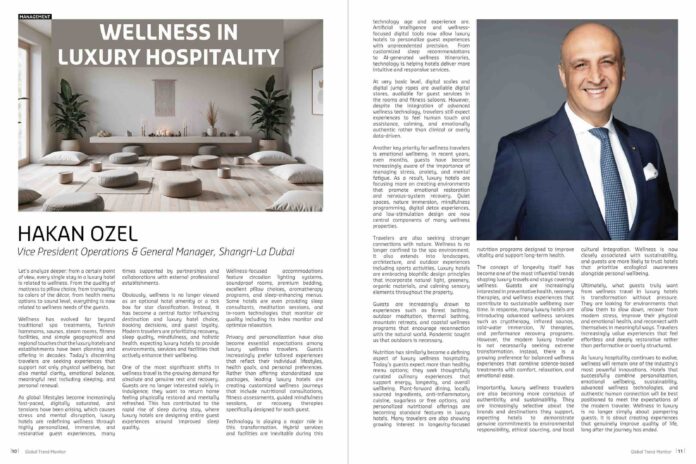

Hakan Ozel, Vice President Operations & General Manager, Shangri-La Dubai
Let’s analyze deeper: from a certain point of view, every single stay in a luxury hotel is related to wellness. From the quality of mattress to pillow choice, from tranquility to colors of the décor, from health menu options to sound level, everything is now related to wellness needs of the guests.
Wellness has evolved far beyond traditional spa treatments, Turkish hammams, saunas, steam rooms, fitness facilities, and simple geographical and regional touches that the luxury hotels and establishments have been planning and offering in decades. Today’s discerning travelers are seeking experiences that support not only physical wellbeing, but also mental clarity, emotional balance, meaningful rest including sleeping, and personal renewal.
As global lifestyles become increasingly fast-paced, digitally saturated, and tensions have been arising, which causes stress and mental disruption, luxury hotels are redefining wellness through highly personalized, immersive, and restorative guest experiences, many times supported by partnerships and collaborations with external professional establishments.
Obviously, wellness is no longer viewed as an optional hotel amenity or a tick box for star classification. Instead, it has become a central factor influencing destination and luxury hotel choice, booking decisions, and guest loyalty. Modern travelers are prioritizing recovery, sleep quality, mindfulness, and holistic health, expecting luxury hotels to provide environments, services and facilities that actively enhance their wellbeing.
One of the most significant shifts in wellness travel is the growing demand for absolute and genuine rest and recovery. Guests are no longer interested solely in indulgence; they want to return home feeling physically restored and mentally refreshed. This has contributed to the rapid rise of sleep during stay, where luxury hotels are designing entire guest experiences around improved sleep quality.
Wellness-focused accommodations feature circadian lighting systems, soundproof rooms, premium bedding, excellent pillow choices, aromatherapy programs, and sleep-enhancing menus. Some hotels are even providing sleep consultants, meditation sessions, and in-room technologies that monitor air quality including its index monitor and optimize relaxation.
Privacy and personalization have also become essential expectations among luxury wellness travelers. Guests increasingly prefer tailored experiences that reflect their individual lifestyles, health goals, and personal preferences. Rather than offering standardized spa packages, leading luxury hotels are creating customized wellness journeys that include nutritional consultations, fitness assessments, guided mindfulness sessions, or recovery therapies specifically designed for each guest.
Technology is playing a major role in this transformation. Hybrid services and facilities are inevitable during this technology age and experience are. Artificial intelligence and wellness-focused digital tools now allow luxury hotels to personalize guest experiences with unprecedented precision. From customized sleep recommendations to AI-generated wellness itineraries, technology is helping hotels deliver more intuitive and responsive services. At very basic level, digital scales and digital jump ropes are available digital stores, available for guest services in the rooms and fitness saloons. However, despite the integration of advanced wellness technology, travelers still expect experiences to feel human touch and assistance, calming, and emotionally authentic rather than clinical or overly data-driven.
Another key priority for wellness travelers is emotional wellbeing. In recent years, even months, guests have become increasingly aware of the importance of managing stress, anxiety, and mental fatigue. As a result, luxury hotels are focusing more on creating environments that promote emotional restoration and nervous-system recovery. Quiet spaces, nature immersion, mindfulness programming, digital detox experiences, and low-stimulation design are now central components of many wellness properties.
Travelers are also seeking stronger connections with nature. Wellness is no longer confined to the spa environment. It also extends into landscapes, architecture, and outdoor experiences including sports activities. Luxury hotels are embracing biophilic design principles that incorporate natural light, greenery, organic materials, and calming sensory elements throughout the property. Guests are increasingly drawn to experiences such as forest bathing, outdoor meditation, thermal bathing, mountain retreats, and coastal wellness programs that encourage reconnection with the natural world. Pandemic taught us that outdoors is necessary.
Nutrition has similarly become a defining aspect of luxury wellness hospitality. Today’s guests expect more than healthy menu options; they seek thoughtfully curated culinary experiences that support energy, longevity, and overall wellbeing. Plant-forward dining, locally sourced ingredients, anti-inflammatory cuisine, sugarless or free options, and personalized nutritional offerings are becoming standard features in luxury hotels. Many travelers are also showing growing interest in longevity-focused nutrition programs designed to improve vitality and support long-term health.
The concept of longevity itself has become one of the most influential trends shaping luxury travels and stays covering wellness. Guests are increasingly interested in preventative health, recovery therapies, and wellness experiences that contribute to sustainable wellbeing over time. In response, many luxury hotels are introducing advanced wellness services such as cryotherapy, infrared saunas, cold-water immersion, IV therapies, and performance recovery programs. However, the modern luxury traveler is not necessarily seeking extreme transformation. Instead, there is a growing preference for balanced wellness experiences that combine science-based treatments with comfort, relaxation, and emotional ease.
Importantly, luxury wellness travelers are also becoming more conscious of authenticity and sustainability. They are increasingly selective about the brands and destinations they support, expecting hotels to demonstrate genuine commitments to environmental responsibility, ethical sourcing, and local cultural integration. Wellness is now closely associated with sustainability, and guests are more likely to trust hotels that prioritize ecological awareness alongside personal wellbeing.
Ultimately, what guests truly want from wellness travel in luxury hotels is transformation without pressure. They are looking for environments that allow them to slow down, recover from modern stress, improve their physical and emotional health, and reconnect with themselves in meaningful ways. Travelers increasingly value experiences that feel effortless and deeply restorative rather than performative or overly structured.
As luxury hospitality continues to evolve, wellness will remain one of the industry’s most powerful innovations. Hotels that successfully combine personalization, emotional wellbeing, sustainability, advanced wellness technologies, and authentic human connection will be best positioned to meet the expectations of the modern traveler. Wellness in luxury is no longer simply about pampering guests. It is about creating experiences that genuinely improve quality of life, long after the journey has ended.

