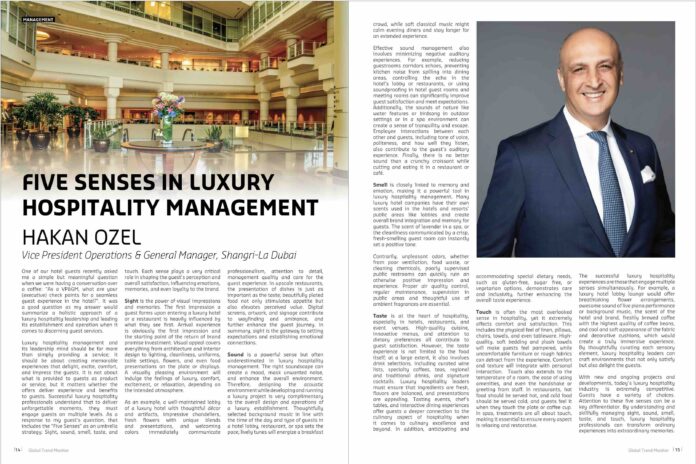

Hakan Ozel, Vice President Operations & General Manager, Shangri-La Dubai
One of our hotel guests recently asked me a simple but meaningful question when we were having a conversation over a coffee: “As a VP&GM, what are your (executive) check points for a seamless guest experience in the hotel?”. It was a good question as my answer would summarize a holistic approach of a luxury hospitality leadership and leading its establishment and operation when it comes to discerning guest services. Luxury hospitality management and its leadership mind should be far more than simply providing a service; it should be about creating memorable experiences that delight, excite, comfort, and impress the guests. It is not about what is provided to guests as product or service, but it matters whether the offers deliver experience and benefits to guests. Successful luxury hospitality professionals understand that to deliver unforgettable moments, they must engage guests on multiple levels. As a response to my guest’s question, that includes the “Five Senses” as an umbrella strategy: Sight, sound, smell, taste, and touch. Each sense plays a very critical role in shaping the guest’s perception and overall satisfaction, influencing emotions, memories, and even loyalty to the brand.
Sight is the power of visual impressions and memories. The first impression a guest forms upon entering a luxury hotel or a restaurant is heavily influenced by what they see first. Arrival experience is obviously the first impression and the starting point of the return of brand promise investment. Visual appeal covers everything from architecture and interior design to lighting, cleanliness, uniforms, table settings, flowers, and even food presentations on the plate or displays. A visually pleasing environment will indulge the feelings of luxury, comfort, excitement, or relaxation, depending on the intended atmosphere.
As an example, a well-maintained lobby of a luxury hotel with thoughtful décor and artifacts, impressive chandeliers, fresh flowers with unique blends and presentations, and welcoming colors immediately communicate professionalism, attention to detail, management quality and care for the guest experience. In upscale restaurants, the presentation of dishes is just as important as the taste; beautifully plated food not only stimulates appetite but also elevates perceived value. Digital screens, artwork, and signage contribute to wayfinding and ambiance, and further enhance the guest journey. In summary, sight is the gateway to setting expectations and establishing emotional connections.
Sound is a powerful sense but often underestimated in luxury hospitality management. The right soundscape can create a mood, mask unwanted noise, and enhance the overall environment. Therefore, designing the acoustic environment while developing and running a luxury project is very complimentary to the overall design and operations of a luxury establishment. Thoughtfully selected background music in line with the time of the day and type of guests in a hotel lobby, restaurant, or spa sets the pace; lively tunes will energize a breakfast crowd, while soft classical music might calm evening diners and stay longer for an extended experience.
Effective sound management also involves minimizing negative auditory experiences. For example, reducing guestrooms corridors echoes, preventing kitchen noise from spilling into dining areas, controlling the echo in the hotel’s lobby or restaurants, or using soundproofing in hotel guest rooms and meeting rooms can significantly improve guest satisfaction and meet expectations. Additionally, the sounds of nature like water features or birdsong in outdoor settings or in a spa environment can create a sense of tranquility and escape. Employee interactions between each other and guests, including tone of voice, politeness, and how well they listen, also contribute to the guest’s auditory experience. Finally, there is no better sound than a crunchy croissant while cutting and eating it in a restaurant or café.
Smell is closely linked to memory and emotion, making it a powerful tool in luxury hospitality management. Many luxury hotel companies have their own scents used in the hotels and resorts’ public areas like lobbies and create overall brand integration and memory for guests. The scent of lavender in a spa, or the cleanliness communicated by a crisp, fresh-smelling guest room can instantly set a positive tone.
Contrarily, unpleasant odors, whether from poor ventilation, food waste, or cleaning chemicals, poorly supervised public restrooms can quickly ruin an otherwise positive impression and experience. Proper air quality control, regular maintenance, supervision in public areas and thoughtful use of ambient fragrances are essential.
Taste is at the heart of hospitality, especially in hotels, restaurants, and event venues. High-quality cuisine, innovative menus, and attention to dietary preferences all contribute to guest satisfaction. However, the taste experience is not limited to the food itself; at a large extent, it also involves drink selections, including curated wine lists, specialty coffees, teas, regional and traditional drinks, and signature cocktails. Luxury hospitality leaders must ensure that ingredients are fresh, flavors are balanced, and presentations are appealing. Tasting events, chef’s tables, and interactive dining experiences offer guests a deeper connection to the culinary aspect of hospitality when it comes to culinary excellence and beyond. In addition, anticipating and accommodating special dietary needs, such as gluten-free, sugar free, or vegetarian options, demonstrates care and inclusivity, further enhancing the overall taste experience.
Touch is often the most overlooked sense in hospitality, yet it extremely affects comfort and satisfaction. This includes the physical feel of linen, pillows, chairs, towels, and even tableware. High-quality, soft bedding and plush towels will make guests feel pampered, while uncomfortable furniture or rough fabrics can detract from the experience. Comfort and texture will integrate with personal interaction. Touch also extends to the temperature of a room, the ease of using amenities, and even the handshake or greeting from staff. In restaurants, hot food should be served hot, and cold food should be served cold, and guests feel it when they touch the plate or coffee cup. In spas, treatments are all about touch, making it essential to ensure every aspect is relaxing and restorative.
The successful luxury hospitality experiences are those that engage multiple senses simultaneously. For example, a luxury hotel lobby lounge would offer breathtaking flower arrangements, awesome sound of live piano performance or background music, the scent of the hotel and brand, freshly brewed coffee with the highest quality of coffee beans, and cool and soft appearance of the fabric and decorative cushions, which would create a truly immersive experience. By thoughtfully curating each sensory element, luxury hospitality leaders can craft environments that not only satisfy but also delight the guests.
With new and ongoing projects and developments, today’s luxury hospitality industry is extremely competitive. Guests have a variety of choices. Attention to these five senses can be a key differentiator. By understanding and skillfully managing sight, sound, smell, taste, and touch, luxury hospitality professionals can transform ordinary experiences into extraordinary memories.

