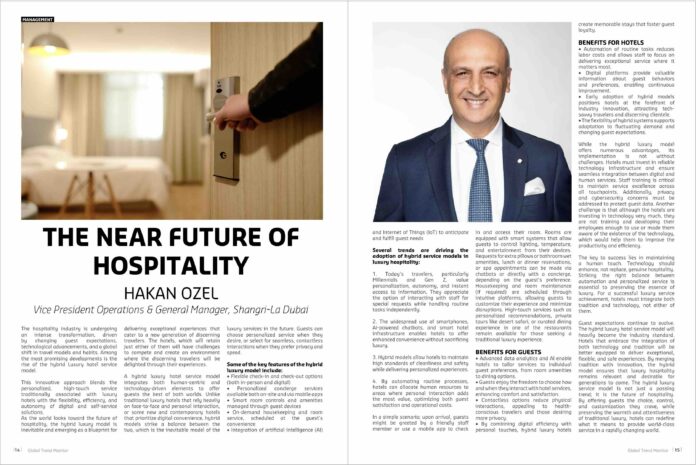

Hakan Ozel, Vice President Operations & General Manager, Shangri-La Dubai
The hospitality industry is undergoing an intense transformation, driven by changing guest expectations, technological advancements, and a global shift in travel models and habits. Among the most promising developments is the rise of the hybrid Luxury hotel service model. This innovative approach blends the personalized, high-touch service traditionally associated with luxury hotels with the flexibility, efficiency, and autonomy of digital and self-service solutions. As the world looks toward the future of hospitality, the hybrid luxury model is inevitable and emerging as a blueprint for delivering exceptional experiences that cater to a new generation of discerning travelers. The hotels, which will retain just either of them will have challenges to compete and create an environment where the discerning travelers will be delighted through their experiences.
A hybrid luxury hotel service model integrates both human-centric and technology-driven elements to offer guests the best of both worlds. Unlike traditional luxury hotels that rely heavily on face-to-face and personal interaction, or some new and contemporary hotels that prioritize digital convenience, hybrid models strike a balance between the two, which is the inevitable model of the luxury services in the future. Guests can choose personalized service when they desire, or select for seamless, contactless interactions when they prefer privacy and speed.
Some of the key features of the hybrid luxury model include:
- Flexible check-in and check-out options (both in-person and digital)
- Personalized concierge services available both on-site and via mobile apps
- Smart room controls and amenities managed through guest devices
- On-demand housekeeping and room service, scheduled at the guest’s convenience
- Integration of artificial intelligence (AI) and Internet of Things (IoT) to anticipate and fulfill guest needs
Several trends are driving the adoption of hybrid service models in luxury hospitality:
- Today’s travelers, particularly Millennials and Gen Z, value personalization, autonomy, and instant access to information. They appreciate the option of interacting with staff for special requests while handling routine tasks independently.
- The widespread use of smartphones, AI-powered chatbots, and smart hotel infrastructure enables hotels to offer enhanced convenience without sacrificing luxury.
- Hybrid models allow hotels to maintain high standards of cleanliness and safety while delivering personalized experiences.
- By automating routine processes, hotels can allocate human resources to areas where personal interaction adds the most value, optimizing both guest satisfaction and operational costs.
In a simple scenario; upon arrival, guests might be greeted by a friendly staff member or use a mobile app to check in and access their room. Rooms are equipped with smart systems that allow guests to control lighting, temperature, and entertainment from their devices. Requests for extra pillows or bathroom wet amenities, lunch or dinner reservations, or spa appointments can be made via chatbots or directly with a concierge, depending on the guest’s preference. Housekeeping and room maintenance (if required) are scheduled through intuitive platforms, allowing guests to customize their experience and minimize disruptions. High-touch services such as personalized recommendations, private tours like desert safari, or curated dining experience in one of the restaurants remain available for those seeking a traditional luxury experience.
Benefits for Guests
- Advanced data analytics and AI enable hotels to tailor services to individual guest preferences, from room amenities to dining options.
- Guests enjoy the freedom to choose how and when they interact with hotel services, enhancing comfort and satisfaction.
- Contactless options reduce physical interactions, appealing to health-conscious travelers and those desiring more privacy.
- By combining digital efficiency with personal touches, hybrid luxury hotels create memorable stays that foster guest loyalty.
Benefits for Hotels
- Automation of routine tasks reduces labor costs and allows staff to focus on delivering exceptional service where it matters most.
- Digital platforms provide valuable information about guest behaviors and preferences, enabling continuous improvement.
- Early adoption of hybrid models positions hotels at the forefront of industry innovation, attracting tech-savvy travelers and discerning clientele.
- The flexibility of hybrid systems supports adaptation to fluctuating demand and changing guest expectations.
While the hybrid luxury model offers numerous advantages, its implementation is not without challenges. Hotels must invest in reliable technology infrastructure and ensure seamless integration between digital and human services. Staff training is critical to maintain service excellence across all touchpoints. Additionally, privacy and cybersecurity concerns must be addressed to protect guest data. Another challenge is that although the hotels are investing in technology very much, they are not training and developing their employees enough to use or made them aware of the existence of the technology, which would help them to improve the productivity and efficiency.
The key to success lies in maintaining a human touch. Technology should enhance, not replace, genuine hospitality. Striking the right balance between automation and personalized service is essential to preserving the essence of luxury. For a successful luxury service achievement, hotels must integrate both tradition and technology, not either of them.
Guest expectations continue to evolve. The hybrid luxury hotel service model will heavily become the industry standard. Hotels that embrace the integration of both technology and tradition will be better equipped to deliver exceptional, flexible, and safe experiences. By merging tradition with innovation, the hybrid model ensures that luxury hospitality remains relevant and desirable for generations to come. The hybrid luxury service model is not just a passing trend; it is the future of hospitality. By offering guests the choice, control, and customization they crave, while preserving the warmth and attentiveness of traditional luxury, hotels can redefine what it means to provide world-class service in a rapidly changing world.

