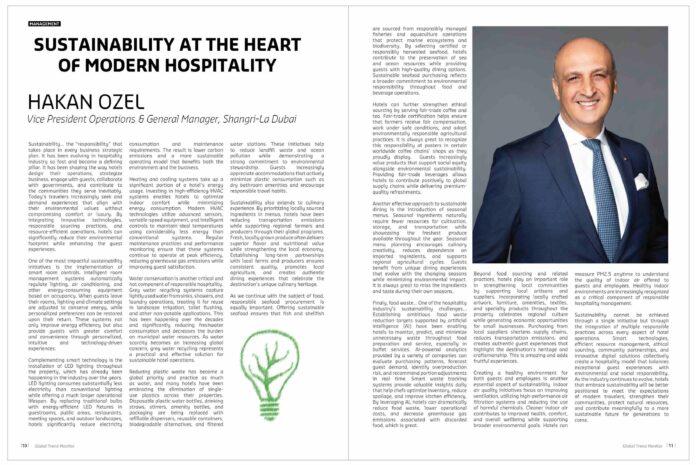

Hakan Ozel, Vice President Operations & General Manager, Shangri-La Dubai
Sustainability… the “responsibility” that takes place in every business strategic plan. It has been evolving in hospitality industry so fast and became a defining pillar. It has been shaping the way hotels design their operations, strategize business, engage with guests, collaborate with governments, and contribute to the communities they serve inevitably. Today’s travelers increasingly seek and demand experiences that align with their environmental values without compromising comfort or luxury. By integrating innovative technologies, responsible sourcing practices, and resource-efficient operations, hotels can significantly reduce their environmental footprint while enhancing the guest experiences.
One of the most impactful sustainability initiatives is the implementation of smart room controls. Intelligent room management systems automatically regulate lighting, air conditioning, and other energy-consuming equipment based on occupancy. When guests leave their rooms, lighting and climate settings are adjusted to conserve energy, while personalized preferences can be restored upon their return. These systems not only improve energy efficiency but also provide guests with greater comfort and convenience through personalized, intuitive and technology-driven experiences.
Complementing smart technology is the installation of LED lighting throughout the property, which has already been happening in the industry over the years. LED lighting consumes substantially less electricity than conventional lighting while offering a much longer operational lifespan. By replacing traditional bulbs with energy-efficient LED fixtures in guestrooms, public areas, restaurants, meeting spaces, and outdoor landscapes, hotels significantly reduce electricity consumption and maintenance requirements. The result is lower carbon emissions and a more sustainable operating model that benefits both the environment and the business.
Heating and cooling systems take up a significant portion of a hotel’s energy usage. Investing in high-efficiency HVAC systems enables hotels to optimize indoor comfort while minimizing energy consumption. Modern HVAC technologies utilize advanced sensors, variable-speed equipment, and intelligent controls to maintain ideal temperatures using considerably less energy than conventional systems. Regular maintenance practices and performance monitoring ensure that these systems continue to operate at peak efficiency, reducing greenhouse gas emissions while improving guest satisfaction.
Water conservation is another critical and hot component of responsible hospitality. Grey water recycling systems capture lightly used water from sinks, showers, and laundry operations, treating it for reuse in landscape irrigation, toilet flushing, and other non-potable applications. This has been happening over the decades and significantly reducing freshwater consumption and decreases the burden on municipal water resources. As water scarcity becomes an increasing global concern, grey water recycling represents a practical and effective solution for sustainable hotel operations.
Reducing plastic waste has become a global priority and practice as much as water, and many hotels have been embracing the elimination of single-use plastics across their properties. Disposable plastic water bottles, drinking straws, stirrers, amenity bottles, and packaging are being replaced with refillable dispensers, reusable containers, biodegradable alternatives, and filtered water stations. These initiatives help to reduce landfill waste and ocean pollution while demonstrating a strong commitment to environmental stewardship. Guests increasingly appreciate accommodations that actively minimize plastic consumption such as dry bathroom amenities and encourage responsible travel habits.
Sustainability also extends to culinary experience. By prioritizing locally sourced ingredients in menus, hotels have been reducing transportation emissions while supporting regional farmers and producers through their global programs. Fresh, locally grown produce often delivers superior flavor and nutritional value while strengthening the local economy. Establishing long-term partnerships with local farms and producers ensures consistent quality, promotes local agriculture, and creates authentic dining experiences that celebrate the destination’s unique culinary heritage.
As we continue with the subject of food, responsible seafood procurement is equally important. Offering sustainable seafood ensures that fish and shellfish are sourced from responsibly managed fisheries and aquaculture operations that protect marine ecosystems and biodiversity. By selecting certified or responsibly harvested seafood, hotels contribute to the preservation of sea and ocean resources while providing guests with high-quality dining options. Sustainable seafood purchasing reflects a broader commitment to environmental responsibility throughout food and beverage operations.
Hotels can further strengthen ethical sourcing by serving fair-trade coffee and tea. Fair-trade certification helps ensure that farmers receive fair compensation, work under safe conditions, and adopt environmentally responsible agricultural practices. It is always great to recognize this responsibility at posters in certain worldwide coffee chains’ shops as they proudly display. Guests increasingly value products that support social equity alongside environmental sustainability. Providing fair-trade beverages allows hotels to contribute positively to global supply chains while delivering premium-quality refreshments.
Another effective approach to sustainable dining is the introduction of seasonal menus. Seasonal ingredients naturally require fewer resources for cultivation, storage, and transportation while showcasing the freshest produce available throughout the year. Seasonal menu planning encourages culinary creativity, reduces dependence on imported ingredients, and supports regional agricultural cycles. Guests benefit from unique dining experiences that evolve with the changing seasons while minimizing environmental impact. It is always great to miss the ingredients and taste during their own seasons.
Finaly, food waste… One of the hospitality industry’s sustainability challenges… Establishing ambitious food waste reduction targets supported by artificial intelligence (AI) have been enabling hotels to monitor, predict, and minimize unnecessary waste throughout food preparation and service, especially in buffet services. AI-powered analytics provided by a variety of companies can evaluate purchasing patterns, forecast guest demand, identify overproduction risk, and recommend portion adjustments in real time. Smart waste tracking systems provide valuable insights daily that help chefs optimize inventory, reduce spoilage, and improve kitchen efficiency. By leveraging AI, hotels can dramatically reduce food waste, lower operational costs, and decrease greenhouse gas emissions associated with discarded food, which is great.
Beyond food sourcing and related practices, hotels play an important role in strengthening local communities by supporting local artisans and suppliers. Incorporating locally crafted artwork, furniture, amenities, textiles, and specialty products throughout the property celebrates regional culture while generating economic opportunities for small businesses. Purchasing from local suppliers shortens supply chains, reduces transportation emissions, and creates authentic guest experiences that highlight the destination’s heritage and craftsmanship. This is amazing and adds fruitful experiences.
Creating a healthy environment for both guests and employees is another essential aspect of sustainability. Indoor air quality initiatives focus on improving ventilation, utilizing high-performance air filtration systems and reducing the use of harmful chemicals. Cleaner indoor air contributes to improved health, comfort, and overall wellbeing while supporting broader environmental goals. Hotels can measure PM2.5 anytime to understand the quality of indoor air offered to guests and employees. Healthy indoor environments are increasingly recognized as a critical component of responsible hospitality management.
Sustainability cannot be achieved through a single initiative but through the integration of multiple responsible practices across every aspect of hotel operations. Smart technologies, efficient resource management, ethical sourcing, community partnerships, and innovative digital solutions collectively create a hospitality model that balances exceptional guest experiences with environmental and social responsibility. As the industry continues to evolve, hotels that embrace sustainability will be better positioned to meet the expectations of modern travelers, strengthen their communities, protect natural resources, and contribute meaningfully to a more sustainable future for generations to come.

