
What Ambiente 2026 Revealed About the Future of Hospitality
By Shereen Shabnam
Hospitality has always been about making people feel something. But in 2026, that feeling is no longer shaped by service alone. It is increasingly influenced by design, materials, operational intelligence, sustainability, and the ability to create spaces that leave a lasting emotional impression.
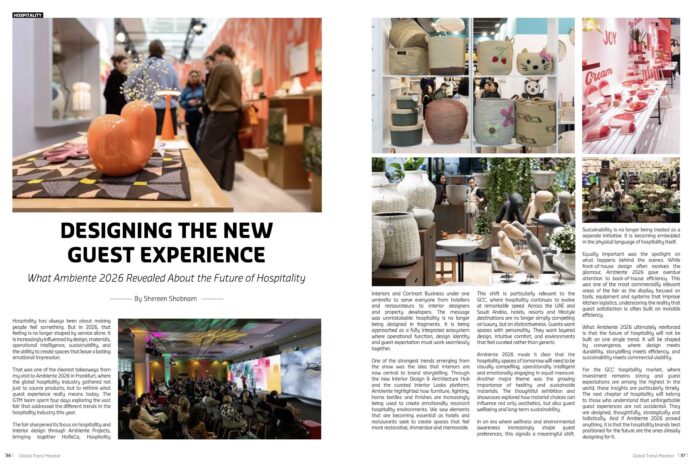
That was one of the clearest takeaways from my visit to Ambiente 2026 in Frankfurt, where the global hospitality industry gathered not just to source products, but to rethink what guest experience really means today. The GTM team spent four days exploring the vast fair that addressed the different trends in the hospitality industry this year.
The fair sharpened its focus on hospitality and interior design through Ambiente Projects, bringing together HoReCa, Hospitality Interiors and Contract Business under one umbrella to serve everyone from hoteliers and restaurateurs to interior designers and property developers. The message was unmistakable: hospitality is no longer being designed in fragments. It is being approached as a fully integrated ecosystem where operational function, design identity and guest expectation must work seamlessly together.
One of the strongest trends emerging from the show was the idea that interiors are now central to brand storytelling. Through the new Interior Design & Architecture Hub and the curated Interior Looks platform, Ambiente highlighted how furniture, lighting, home textiles and finishes are increasingly being used to create emotionally resonant hospitality environments. We saw elements that are becoming essential as hotels and restaurants seek to create spaces that feel more restorative, immersive and memorable.
This shift is particularly relevant to the GCC, where hospitality continues to evolve at remarkable speed. Across the UAE and Saudi Arabia, hotels, resorts and lifestyle destinations are no longer simply competing on luxury, but on distinctiveness. Guests want spaces with personality. They want layered design, intuitive comfort, and environments that feel curated rather than generic.
Ambiente 2026 made it clear that the hospitality spaces of tomorrow will need to be visually compelling, operationally intelligent and emotionally engaging in equal measure. Another major theme was the growing importance of healthy and sustainable materials. The thoughtful exhibition and showcases explored how material choices can influence not only aesthetics, but also guest wellbeing and long-term sustainability.
In an era where wellness and environmental awareness increasingly shape guest preferences, this signals a meaningful shift. Sustainability is no longer being treated as a separate initiative. It is becoming embedded in the physical language of hospitality itself.
Equally important was the spotlight on what happens behind the scenes. While front-of-house design often receives the glamour, Ambiente 2026 gave overdue attention to back-of-house efficiency. This was one of the most commercially relevant areas of the fair as the display focused on tools, equipment and systems that improve kitchen logistics, underscoring the reality that guest satisfaction is often built on invisible efficiency.
What Ambiente 2026 ultimately reinforced is that the future of hospitality will not be built on one single trend. It will be shaped by convergence, where design meets durability, storytelling meets efficiency, and sustainability meets commercial viability.
For the GCC hospitality market, where investment remains strong and guest expectations are among the highest in the world, these insights are particularly timely. The next chapter of hospitality will belong to those who understand that unforgettable guest experiences are not accidental. They are designed, thoughtfully, strategically and holistically. And if Ambiente 2026 proved anything, it is that the hospitality brands best positioned for the future are the ones already designing for it.

