

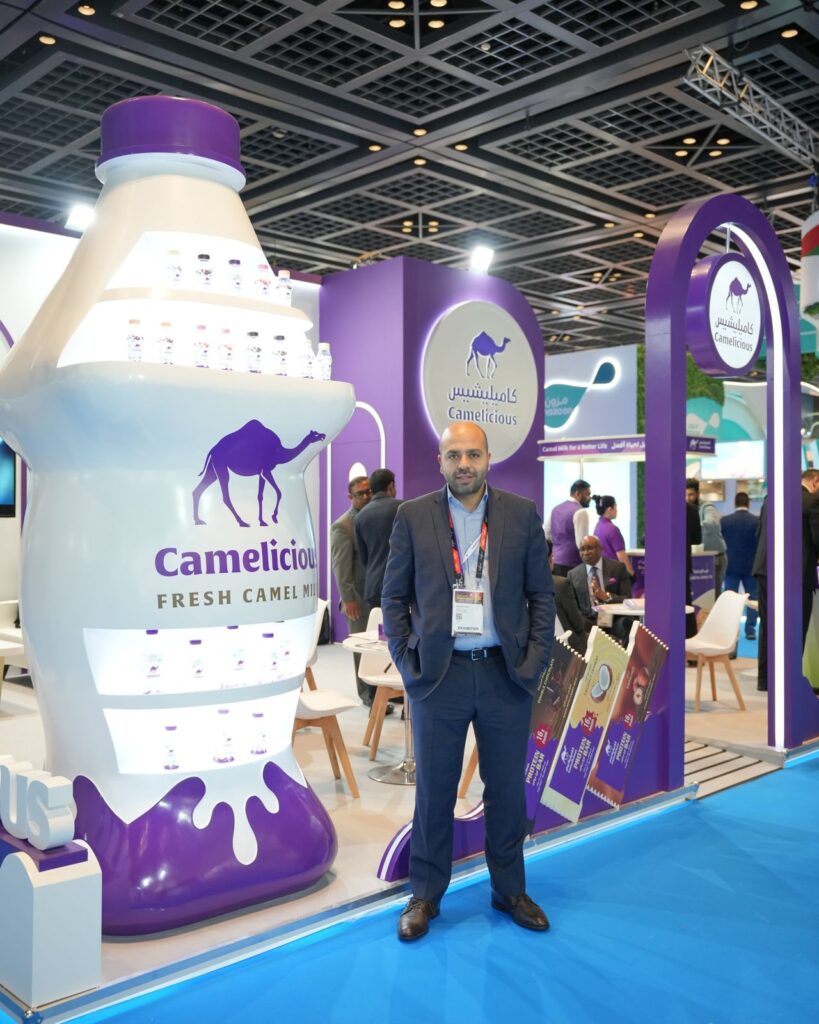
As wellness moves from trend to long-term consumer priority, food brands are under increasing pressure to bridge the gap between aspiration and action. At Gulfood, Camelicious unveiled new UAE consumer insights that highlight a persistent disconnect between health intentions and everyday behavior. In this conversation, Hesham Yehia, Acting CEO of Camelicious, discusses why evidence-based innovation is critical to closing that gap, how camel milk aligns with modern wellness needs, and why food brands must evolve from producers to active contributors to public health.
Wellness has become an aspiration for many consumers, but behavior often lags behind intention. From the UAE consumer insights you unveiled at Gulfood, where do you see the biggest disconnect and why does it persist?
Wellness is firmly part of the consumer mindset in the UAE, but our insights show that intention does not always translate into daily behavior. The biggest disconnect lies in the gap between awareness and practicality. Consumers want to make healthier choices, but convenience, habit, and inconsistent information often override those intentions. Wellness is still too often framed as an abstract goal rather than a series of small, achievable decisions. Closing that gap requires clearer education, accessible nutrition, and products that genuinely fit into everyday life.
Camelicious chose to ground its wellness narrative in data rather than trends or marketing language. How important is evidence-based insight in shaping the future of food and beverage innovation in the region?
Evidence-based insight is essential if the food and beverage sector is to innovate responsibly. Without data, innovation risks becoming reactive or trend-driven rather than meaningful. By grounding our approach in real UAE consumer insights, we are able to understand not just what people say they want, but how they actually behave. This allows us to develop products and strategies that are relevant, credible, and capable of delivering real impact, rather than short-term marketing appeal.
The panel positioned Camelicious not just as a producer, but as a contributor to the wider wellness ecosystem. How do you see the role of food brands evolving in influencing public health outcomes?
Food brands today have a much broader responsibility than simply supplying products. We influence dietary habits, nutritional awareness, and long-term wellbeing. As such, our role is evolving from producer to partner in public health. That means supporting balanced nutrition, communicating transparently, and ensuring that the products we bring to market genuinely contribute to healthier outcomes, rather than simply using the language of wellness.
Functional and health-led products are gaining momentum globally. What makes camel milk uniquely positioned to meet modern wellness needs, particularly in markets like the UAE?
Camel milk is naturally aligned with many modern wellness needs. It is easier to digest for many consumers, contains functional nutrients, and is suitable for those with certain dairy sensitivities. In the UAE, it also carries cultural relevance and trust. This combination of heritage and functionality allows camel milk to bridge traditional nutrition with contemporary health priorities, offering authenticity at a time when consumers are increasingly skeptical of manufactured wellness trends.
You highlighted the importance of translating insight into impact. What does that look like in practical terms, from product development to how consumers experience Camelicious day-to-day?
Translating insight into impact means embedding wellness thinking across the entire value chain. Practically, this starts with product development informed by research, followed by processing innovation that preserves nutritional integrity. It also extends to packaging formats, accessibility, and consumer education. Ultimately, it is about ensuring that wellness is not just communicated but experienced consistently in how consumers interact with Camelicious every day.
Camelicious operates across both consumer and B2B channels. How does your wellness strategy differ when addressing individual consumption habits versus institutional or commercial food systems?
Individual consumption is shaped by emotion, routine, and personal choice, while B2B environments require consistency, scale, and measurable outcomes. Our wellness principles remain the same across both, but the execution differs. For consumers, we focus on education and accessibility. For B2B partners, we prioritize reliability, scalability, and integration into larger food systems, ensuring nutrition is delivered effectively in both contexts.
Processing innovation and scalable formats were key themes at the panel. How do these capabilities enable Camelicious to bridge the gap between traditional nutrition and contemporary wellness expectations?
Processing innovation allows us to preserve the natural benefits of camel milk while meeting modern expectations around safety, shelf life, and convenience. Scalable formats ensure that traditional nutrition can reach wider audiences without compromising quality. Innovation, for us, is not about altering the essence of camel milk, but about ensuring it remains relevant and accessible in today’s food environment.
Looking ahead, how do you see Camelicious contributing to the next chapter of wellness-driven food innovation, not just in the UAE, but on a global stage?
Looking forward, our ambition is to help redefine wellness as something evidence-led, practical, and inclusive. By combining heritage nutrition with scientific insight and responsible innovation, Camelicious is well positioned to contribute to global wellness conversations. Our focus will remain on delivering credible nutrition at scale, while supporting a more grounded and sustainable approach to wellness-driven food innovation internationally.

