
New Study commissioned by Al Ghurair Centre shows how UAE Consumers are using malls in 2025
A Nielsen-backed survey commissioned by Al Ghurair Centre has revealed compelling shifts in consumer behaviour and the motivations that draw visitors to shopping malls in Dubai. The findings highlight a subtle yet significant cultural evolution in how malls are used in 2025, going beyond retail destinations and becoming embedded in the weekly routine of city residents.
The insights, drawn from more than 750 respondents, provide a fresh perspective on the role of malls in everyday urban life in the emirate, with food, flexibility, and familiarity emerging as defining factors shaping footfall. From midweek visits to longer dwell times and younger solo shoppers, the modern mall is evolving to meet changing demands and serve as a post-work retreat, experimental dining district, and all-encompassing space for everyday errands and social moments.
Dining Takes Centre Stage
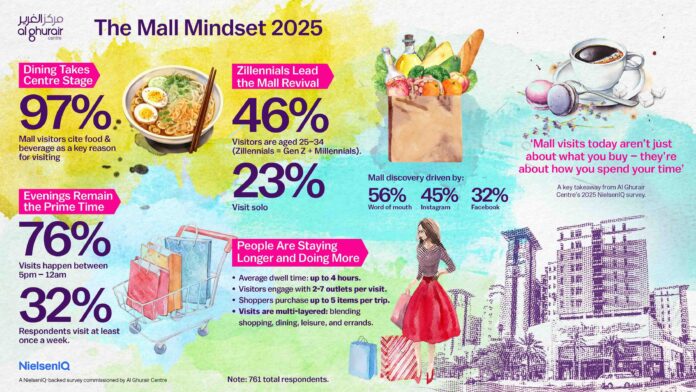
Some 97 per cent of mall visitors now cite food and beverage as a key reason for their visit, placing dining on par with traditional retail and grocery shopping in terms of draw. From catching up with friends over a meal to culinary exploration, communal eating is driving footfall and prompting longer engagement in mall environments. In response, food halls are rising in popularity, offering a curated mix of cuisines and price points in a shared social setting that caters to diverse tastes and budgets.
Evenings Remain the Prime Time
The survey reveals that 76 per cent of visits occur between 5pm and midnight, with 32 per cent of respondents visiting at least once a week. This pattern suggests a shift from mall trips reserved for the weekend for family outings to being part of post-work and post-school routines, especially among residents living or working nearby. For many, malls have become the go-to space for winding down, grabbing a bite, or ticking off errands.
People Are Staying Longer – and Doing More
Today’s mall visit is a layered, multi-purpose experience. The average stay extends up to four hours, with visitors engaging across between two and seven outlets and purchasing up to five items per trip. These behaviours indicate a shift from task-driven visits to a more destination-based experience where shopping, dining, leisure, and utility all overlap in a single outing.
Zillennials Lead the Mall Revival
The demographic story is just as telling with 46 per cent of visitors aged between 25-34 – the demographic colloquially referred to as ‘Zillennials’, a hybrid of Gen Z and Millennials. Interestingly, 23 per cent of them visit solo while 56 per cent discover malls through word of mouth over Instagram (45%) and Facebook (32%) respectively. This highlights the mall as a socially embedded, trusted space, especially among younger, digitally savvy residents who value both autonomy and in-person discovery.
The findings of the new Neilsen study, commissioned by Al Ghurair Centre, reinforce the idea that malls have evolved into living extensions of the communities they serve. With evolving preferences around time use, mobility, and shared experiences, mall environments that reflect these behaviours are best positioned for long-term relevance.

