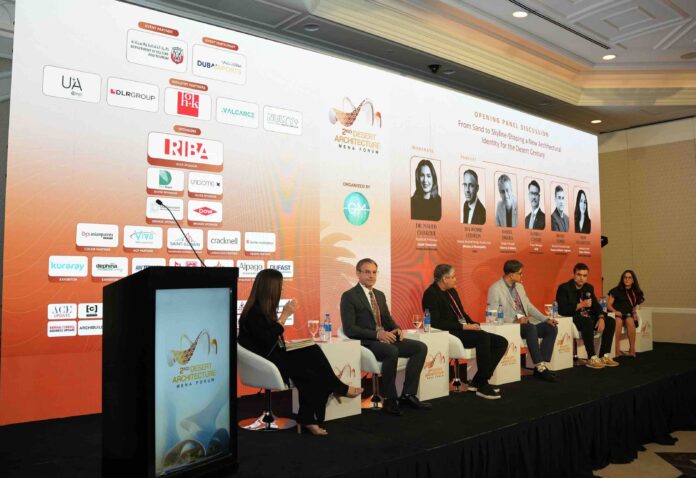

From sand to skyline: industry leaders champion a sustainable future for desert cities
The final day of the Desert Architecture MENA Forum 2026 placed sustainability, environmental intelligence and climate-responsive design at the centre of discussions, bringing together architects, urban planners, developers, policymakers and technology leaders to explore how the region can shape a new architectural identity for the desert century.
Held under the theme “Integrating Heritage with Innovation: The Future of Desert Living,” the forum examined how desert environments can become global benchmarks for sustainable urban development by combining cultural heritage, advanced technologies and environmentally responsible design practices.
The day opened with a high-level panel discussion titled “From Sand to Skyline – Shaping a New Architectural Identity for the Desert Century,” where experts explored how architecture can redefine regional identity while responding to climate challenges, community needs and environmental goals. Speakers highlighted how desert cities can become models for resilient and sustainable urban evolution.
Throughout the day, discussions focused on practical strategies for achieving Net Zero ambitions across the built environment. Experts examined the integration of renewable energy systems, passive cooling techniques, circular construction practices, local materials and resource-efficient urban planning approaches capable of responding to the realities of extreme desert climates.
A keynote presentation by Abdul Traboulsi of Engineering Contracting Co. explored challenges facing the built environment while Vladimir Jovanovic of AECOM followed with insights into how collaboration between architecture, engineering and technology can help turn sustainability ambitions into practical outcomes.
Discussions continued with the “Designing the Net Zero Desert” panel, where industry leaders examined the role of policy, innovation and design in advancing the UAE’s Net Zero 2050 goals. Innovation sessions showcased emerging sustainable technologies and the afternoon concluded with a dedicated lighting session exploring how thoughtful illumination strategies can enhance energy efficiency, preserve desert nightscapes and improve the overall experience of the built environment.
Jordan Dgama, Director of Strategic Market Development, MENA at RIBA said, “The future of desert architecture will be defined by how effectively we balance environmental performance with human experience. As climate challenges continue to influence the way cities are planned and built, architects have a responsibility to create places that are resilient, resource-efficient and deeply connected to their cultural and environmental context. The desert presents unique opportunities for innovation, where traditional knowledge, passive design strategies and emerging technologies can come together to shape a more sustainable future for communities across the region and beyond.”
Speaking on the importance of locally developed sustainable materials, a spokesperson from DesertBoard said: “DesertBoard was developed as a homegrown UAE solution that transforms agricultural palm waste into high-performance and durable wooden boards, creating a sustainable alternative to imported wood products. Manufactured entirely in the UAE from date palm biomass, the material helps divert waste from landfills while supporting circular economy principles. We demonstrate how locally produced materials can contribute to both environmental sustainability and national industrial development.”
Lavannya Radhukumar, Regional commercial manager at Terraco added: “The future of sustainable construction lies in balancing environmental responsibility with practical performance. Through innovative sustainable building materials and finishing solutions, the industry has an opportunity to reduce embodied carbon, improve energy efficiency and support healthier, more resilient buildings that are better suited to the climatic realities of the Middle East.”
Dennis Jacob, Head of the Department for Specifications UAE & Qatar at Asian Paints Arabia, said: “The construction industry has a critical role to play in reducing environmental impact while maintaining performance and durability. Sustainable innovation is no longer a future aspiration but a present-day responsibility, and we continue investing in solutions that improve resource efficiency, reduce lifecycle impacts and support the region’s long-term sustainability goals.”
Dennis also spoke about how Asian Paints’ innovative and patented SmartCare CureAssure is being a breakthrough internal curing technology that has the potential to save approximately 8 billion liters of water annually in the UAE by eliminating the need for conventional water curing. By conserving precious water resources and improving the sustainability of construction practices, SmartCare CureAssure makes a meaningful contribution toward the UAE’s Net Zero and sustainability goals.
The Desert Architecture MENA Forum concluded with a strong consensus that the future of desert development will be defined by collaboration between architects, engineers, policymakers, material innovators and technology providers and the region is increasingly positioned to lead global conversations on climate-responsive architecture and resilient urban development.

