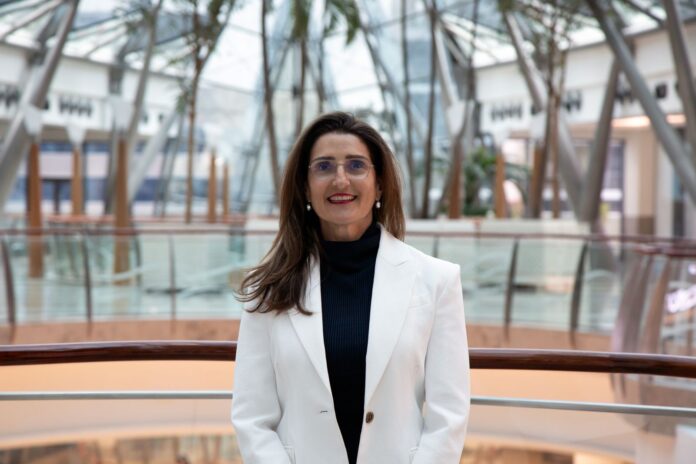

By Mary Del Dosso, Mall Director, BurJuman Mall
Retail loyalty has often been treated as a transaction. Points, discounts, cashback and limited time offers gave customers a reason to return and gave retailers something to measure.
That logic still matters. But it is no longer enough.
In 2026, the consumer mood is more deliberate. People are comparing more, spending more carefully and asking harder questions about value. A recent Deloitte retail outlook points to a structural shift towards value-seeking behaviour, while also noting that value is not shaped by price alone, with non-price factors shaping up to 40% of brand value perception.
PwC notes that Middle East consumer market leaders are operating in a more complex environment, with confidence being tested by global uncertainty. Meanwhile, global real estate consultancy JLL reported that domestic retail formats in the UAE remained resilient in Q1 2026, even as tourism-dependent categories faced softer conditions.
For retail leaders, the implication is clear. Loyalty cannot depend only on the next offer. When people are cautious, selective and surrounded by choice, they return to places that make life easier and feel familiar and connected.
The limits of transactional loyalty
Promotions still have a role. They create urgency, support sales cycles and bring people through the door. But an offer is different from a relationship.
A customer who visits for a discount may leave satisfied but not attached. The next offer, from the next mall, can move them just as easily in another direction. That is the ceiling of loyalty built only around transactions. It can change behaviour in the short term, but it rarely builds memory, trust or preference.
For malls, this distinction matters. Tenant mix, scale and convenience still count, but they are no longer enough on their own. The destinations that stay relevant are the ones that understand their role in people’s actual lives: where families spend time, where communities gather, where residents build routines and where the experience feels familiar enough to return to without needing to be persuaded every time.
Familiarity has become more valuable
In a city as diverse as Dubai, familiarity can be a powerful source of connection. People here come from different nations, cultures and life stages. Many have built lives far from where they started. In that environment, loyalty is not only about what a destination offers. It is also about whether people feel recognised.
That recognition can be simple. A festival they grew up with. A family activity that fits their weekend. A place where children feel comfortable. These moments may seem small, but over time they shape how a place is remembered.
A mall stops being somewhere someone went shopping. It becomes where their child performed, where the family marked Eid, where they met friends after work, where they walked during summer, or where they returned because the space felt easy and known.
That kind of loyalty is not available in a promotions budget.
Belongingness is becoming retail infrastructure
Across the GCC, malls have always played a wider social role. They bring shopping, dining, entertainment and community life into one accessible, climate-controlled environment. In 2026, that role is becoming more visible.
Dubai Mallathon, running from 15 June to 15 September, is a clear example of how malls are increasingly being used as everyday community infrastructure. BurJuman’s Summer Mall Walk reflects the same shift at a destination level.
For resident families, this kind of repeat relevance is powerful. Visits that begin with an activity, workshop, performance or wellness initiative often extend into dining, shopping and other spend. But it only works when the occasion feels genuine and rooted in how the community lives.
Long-standing destinations have an emotional advantage
As Dubai matures, its long-established retail destinations carry something newer assets cannot immediately manufacture – memory.
People associate older malls with life stages. Childhood visits, school performances, festive outings, first shopping trips, family weekends, everyday errands. That history is an asset, but only if it is renewed with relevance.
At BurJuman, that history shaped how the mall approached its next chapter. Since opening in 1991, it has grown alongside Dubai, and the challenge was to evolve in a way that remained relevant to the city and the communities it serves.
A transformation built around purpose
For BurJuman, renewing that relevance began with a simple question: what should a long-established mall offer beyond a line-up of stores? Consumer research undertaken yearly since 2021 explored how people shop, gather and spend their time, and what they increasingly expect from the places they return to.
Those insights shaped a wider transformation that went beyond a physical refurbishment. They informed a refreshed brand identity and the introduction of ‘Right in the Heart’, a positioning that speaks both to BurJuman’s place in central Dubai and to the role it has played in the routines, occasions and memories of the communities around it.
The physical mall evolved around the same thinking. Across more than 75,000 sqm, the focus shifted from simply adding more to making the existing space work better. Obstructive structures were removed to open up sightlines and daylight, circulation and access were reconsidered, and retail, dining and service areas were reorganised around how people actually move through and use the mall. Bulky atrium lifts, Lobby E spiral staircase and a Level 3 fountains were removed. What replaced them was light, visibility, circulation and usable floor area. The new Entrance 5 converted a functional parking-door access into a welcoming glass-fronted entrance facing Al Mankhool’s residential community, supported by a new escalator and lift network.
Some spaces were given an entirely new purpose. A former café area became B Hub, which has since hosted more than 350 wellness sessions, workshops, talks and classes. An underused mezzanine became B Hive, a co-working and social space now attracting around 10,000 users a month. Their value lies in giving people reasons to visit, stay, connect and return, even when shopping is not the starting point.
The transformation also extended to the wider customer journey, with a more considered retail mix including offering brands back home, that resonated with customers to open their UAE fronts first in BurJuman Mall, examples include Blue Tokai, Titan Eye +, Mia by Tanishq and more. Digital services were designed to make everyday visits easier.
That customer-led approach also shaped the evolution of dining. Before developing the permanent Food Pavilion, BurJuman used the same space for street food festivals over several years, learning from how customers responded before committing to the longer-term concept.
For a destination with more than three decades of history, transformation is not about replacing what came before. It is about understanding what still matters, rethinking what no longer works, and creating new experiences that allow people to keep building memories in a place they already know.
From footfall to meaning
That is why, beyond footfall, dwell time and spend, the more strategic question is why people return.
Is it the discount, or the destination? The campaign, or the comfort of the familiar? The incentive, or the fact that the place has become part of family life? The retail destinations that hold up over time will be those that combine commercial discipline with a genuine understanding of the people they serve. They will continue to offer value, but they will not build the relationship on value alone.
In multicultural cities, cultural relevance is becoming one of the few real differentiators left. Price brings people in. Convenience keeps it easy. Scale creates visibility. But recognition creates attachment.
People will always come for a reason. They come back because a place feels like it belongs in their life.

