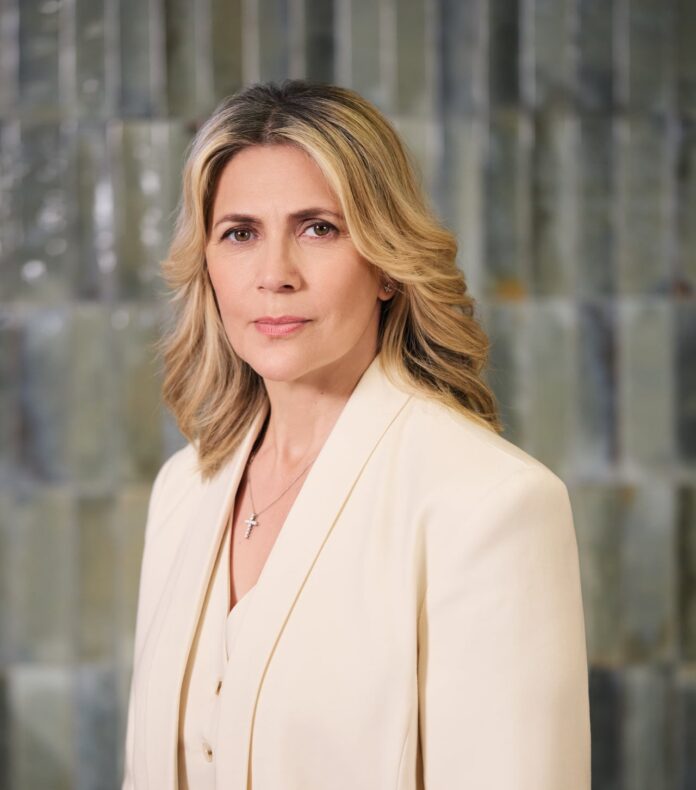

While economies are questioning the cost of constant acceleration, Mareta Gevorkyan stands apart for her commitment to continuity over spectacle, and relevance over scale. Working across finance, urban development, philanthropy, and culture, she has built a career around one central idea: that systems endure when they are designed with care for how people actually live, learn, and belong.
From shaping inclusive financial infrastructure at EvocaBank to leading long-term development and social initiatives through Green Rock and the Keron Foundation, her work resists short-term thinking. Her projects in education, cultural stewardship, public space, and talent development reflect a belief that resilience is not accidental but designed. Equally, through Maison Marom and its associated ventures, she demonstrates how culture can remain economically viable without being reduced to performance or commodity.
In our interview, Gevorkyan reflects on the global shift from speed to substance, the fine line between cultural continuity and commodification, the role of design in shaping institutions, and why “quiet luxury” and restraint are emerging as signals of confidence rather than absence. She also shares her perspective on leadership, talent mobility, and philanthropy as system-building—offering a blueprint for development that prioritises long-term capacity over temporary results.
Across economies and societies, we are seeing a shift from speed and scale toward resilience and relevance. What structural changes do you see driving this transition?
Communities are rethinking what actually serves them over time. The focus on quarterly returns and rapid expansion created infrastructure that often fails when tested by real conditions. What tends to last are systems designed with attention to how people actually live and work.
In Armenia, projects that survive regulatory changes and economic shifts are those built around education and skill development rather than quick results. The Apicius Armenia International School of Hospitality in Dilijan, established by the Green Rock Foundation in partnership with Apicius Florence, offers European-standard hospitality training with full scholarships for local students. This model addresses regional employment while creating capacity that grows over time.
Resilience appears when institutions can function across different conditions. Relevance emerges when the work answers questions communities are genuinely asking. Speed often optimizes for visibility. Durability requires different choices.
Culture is increasingly framed as an economic and social asset. Where do you see the line between cultural continuity and cultural commodification being drawn globally?
The difference becomes clear when you look at who benefits and what lasts. Cultural continuity happens when traditions remain part of daily life. Turning culture into a product treats heritage as performance separated from use.
Rien-à-Porter in Yerevan carries Armenian designers alongside international luxury brands. The curation doesn’t separate Armenian work into special categories. It simply belongs there.
Restoration projects reveal the same principle. The Afrikyan Building houses Keron Foundation and preserves the structure’s historical character while serving current needs. The building’s heritage remains visible rather than erased. Preservation becomes continuation when structures carry their past while functioning in the present.
Economic value can support cultural work, but the moment culture exists primarily to generate revenue, something essential shifts. The test is whether future generations can still use what’s being preserved.
Design is no longer just aesthetic – it is shaping behavior, institutions, and trust. How do you see design thinking influencing systems beyond the creative industries?
Design at the systems level asks how spaces and structures influence what becomes possible. Every building determines how people move through it. Every institution creates patterns of access.
Rien-à-Porter was designed not just as retail space but as a platform for representing Armenian and international designers. The space creates conditions where local work stands alongside established luxury brands. People encounter Narek Jhangiran’s pieces next to international names because the space was designed to make that normal rather than exceptional.
Design thinking applied to development asks: who can enter, what barriers exist, which behaviours does the environment reward? These questions matter in hospitality education.
This extends beyond fashion. When the Dilijan Sports School received its renovation through Green Rock Foundation, reopening in December 2023, design choices determined which programs became possible. New offerings include a gymnastics club and a developing ballet school. The facility now serves over 400 children.
Design shapes whether good intentions become real outcomes.
There is growing attention on “quiet” or intentional luxury, minimalism, and restraint. What broader societal shifts do these preferences reflect?
Restraint signals confidence in what already exists. When quality is certain, excess becomes unnecessary. This shift appears when people have enough experience to recognize the difference between decoration and substance.
The preference for minimalism often emerges in environments with too much visual noise and information. Armenia has experienced rapid development, and within that context, spaces that allow reflection rather than demanding attention offer something increasingly valued.
Maróm Label demonstrates this approach. Based in Paris, the brand brings French professionals to Armenia for extended periods. They spend months working with local historians, artists, and artisans, learning context and studying archives. The resulting collections emerge from genuine exchange rather than surface interpretation. This process requires restraint because it refuses shortcuts.
Global audiences increasingly know the difference between what announces status and what carries it. Societies experiencing rapid change often develop an appetite for work that feels considered rather than rushed. This preference doesn’t reject beauty but insists it should mean something.
Talent mobility is changing, with experienced professionals increasingly moving between sectors and geographies. How is this redefining institutional strength and leadership?
Institutions that attract committed professionals rather than temporary expertise tend to build capacity differently. The difference matters in how knowledge gets passed on.
The Keron Foundation’s main initiative, Talent Pool Program, requires minimum five-year residence commitments in Armenia. Professionals from Spain, France, Estonia, the United States, and other countries relocated to Armenia joining the Armenian State Symphony Orchestra and Armenian State Philharmonic Orchestra while teaching in public schools. This structure ensures expertise transfers to the next generation rather than staying concentrated with visiting specialists.
Musicians like Sergio González Cariñana, Yascha Israelievitch, Martine Varnik, Tatev Yeghiazaryan and Guillermo Masiá Salom conduct workshops alongside performances, creating conditions where local students access international standards of training. When experts commit to staying long enough to see results, they become invested in creating systems that work.
The strength of institutions depends on whether incoming talent strengthens local capacity or creates dependency. Leadership that focuses on long-term contribution over short-term solutions builds differently. Talent mobility can strengthen communities when structured with that intention rather than optimizing for individual career advancement.
Philanthropy is evolving from donation-based models to system-building approaches. What does effective impact look like in this new paradigm?
Effective impact creates conditions where support eventually becomes unnecessary. The shift from donation to system-building requires focusing on capacity rather than immediate relief.
The Green Rock Foundation’s approach in Dilijan shows this model. Rather than funding individual needs, the work addresses infrastructure gaps. The renovation of the sports complex now serves the community independently. The facility operates without needing continued external support.
Similarly, Apicius Armenia received over 700 applications from 12 countries in its first year. The school provides hospitality training with full scholarships for Dilijan residents and supports students through the scholarship program while offering practical mentorship. This structure builds regional capacity in tourism and hospitality, sectors where Armenia has real advantages.
System-building philanthropy asks: will this work when funding stops? Can local leadership take over? Does this strengthen existing institutions? Success shows up when communities no longer need the help that started the change.
In an era of constant disruption, how should leaders think about continuity and what must be preserved, and what should evolve?
Continuity requires knowing the difference between what carries meaning and what reflects habit. Not everything old deserves preservation or represents progress.
The Afrikyan Building restoration mentioned earlier shows one way to approach this. The structure now houses the Keron Foundation office and in the near future Vernatoun, a community space, while keeping its historical character intact. Buildings can serve new purposes without erasing what they were.
Similar thinking guides the work at the AOKS Building on Abovyan Street, where restoration by Keron Foundation and partners is underway. The early 20th-century structure is being transformed for contemporary creative and community use while maintaining its authentic architectural character.
Leaders must know the difference between preserving forms and preserving principles. Forms can adapt. Principles tend to last. When the Armenian State Symphony Orchestra expanded, the commitment to musical excellence continued while the composition of musicians became more international.
What deserves continuity often reveals itself through difficulty. Systems that communities defend during hard times probably matter. Traditions that disappear easily perhaps served historical contexts rather than deeper needs.
Evolution becomes destructive when it erases memory or breaks connection to what came before. It becomes renewal when it honors what existed while meeting current requirements. This difference determines whether communities experience change as loss or as development.
Looking ahead, what indicators do you personally watch to understand whether a society is developing in a healthy, integrated way?
Several things signal whether development serves communities rather than extracting from them.
First: whether young people can build lives locally without needing to leave for opportunity. When the Dilijan High School partnered with Ayb School’s project-based learning model through Keron Foundation support, with Green Rock Foundation as local partner, in August 2025, it created educational alternatives that previously required leaving the region.
Second: the condition of public spaces and shared infrastructure. The Keron Foundation’s investment in three next-generation public playgrounds across Yerevan’s Kentron District, including Karmrakhayt, Vishapagorg, and a third shows whether development prioritizes daily life.
Third: how communities handle cultural assets. The Goddess Anahit exhibition, supported by the Keron Foundation at the History Museum of Armenia, displayed fragments from the British Museum for the first time in Armenia and became the most-visited exhibition in the history of Armenia.
Fourth: whether expertise moves around or stays concentrated. Healthy development shows up when knowledge moves between generations and across institutions rather than gathering in one place. These indicators together suggest whether societies are building real capacity or just appearance.

